
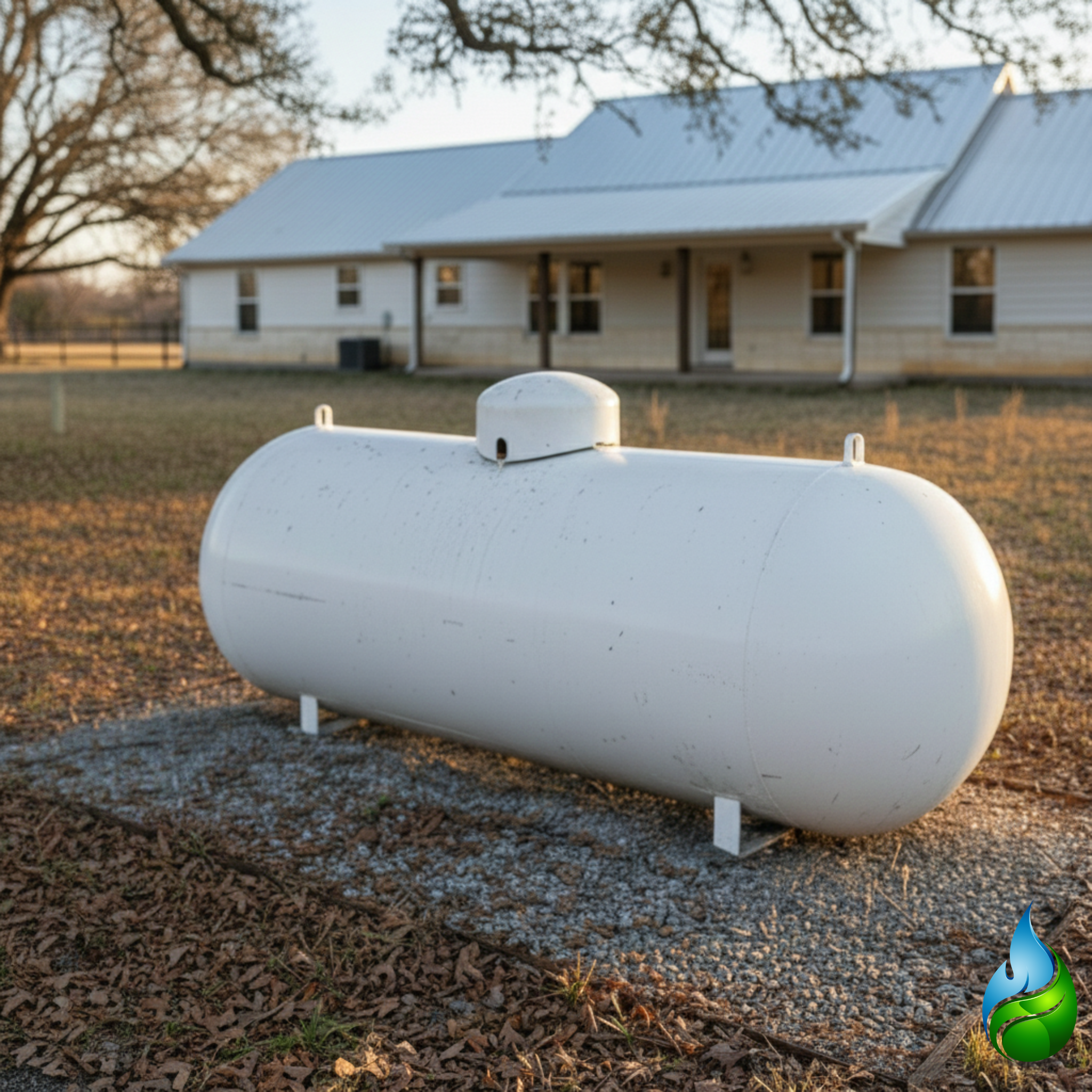
Leasing vs. buying a propane tank is one of the most common questions Greater Houston homeowners ask when setting up propane service. If you are moving into a propane-powered home, building a new house, or adding a standby generator for storm season, understanding the difference between leasing and buying can help you choose the right setup for your property, budget, and long-term needs.
At Noremac Propane, we believe homeowners should understand both options clearly before making a decision. Leasing and buying each have real advantages, but the right fit depends on your property, your budget, and how hands-on you want to be. Here is a straightforward breakdown to help you choose the setup that makes the most sense for your home.
Leasing vs. Buying a Propane Tank: Cost Comparisons
Buying a Tank: Purchasing a propane tank usually requires a larger upfront investment. The total cost can vary based on the size of the tank, the installation requirements, and whether the system includes additional piping or equipment. The benefit is that once the tank is yours, you are not paying ongoing lease fees. For some homeowners, that can make ownership more appealing over the long term, especially if they want more control over fuel purchasing.
Leasing a Tank: Leasing generally comes with a lower upfront cost, which can make it an attractive option for homeowners who want to get started without a large initial expense. Instead of buying the tank outright, you typically pay a monthly or annual lease fee. Depending on the supplier, the agreement may also include certain service terms or minimum usage requirements, so it is important to understand exactly what is included.
When comparing leasing vs. buying a propane tank, homeowners should look at more than just the upfront cost. Maintenance responsibilities, supplier flexibility, and long-term convenience all play a role.
Maintenance Responsibilities
Buying a Tank: When you own the tank, you are generally responsible for maintaining it over time. That can include inspections, upkeep of certain components, and paying for repairs if something needs to be replaced. For homeowners who value control and long-term flexibility, that responsibility may be worth it.
Leasing a Tank: Leasing is often the simpler, more hands-off option. In many cases, the propane supplier retains ownership of the tank and handles much of the routine service and maintenance associated with it. For homeowners who prefer convenience and fewer equipment-related responsibilities, that can be a major advantage.
Flexibility and Supplier Choice
Buying a Tank: One of the biggest benefits of owning your propane tank is flexibility. In most cases, owning the tank gives you more freedom when choosing a propane supplier. That can be especially appealing to homeowners who want to compare fuel pricing, explore service options, or make long-term decisions based on what works best for their household.
Leasing a Tank: Leasing can limit that flexibility. In many cases, a leased tank can only be filled by the company that owns it, which means your propane supply is generally tied to that provider. That is not necessarily a problem if you are happy with the service and terms, but it is something homeowners should understand before signing an agreement.
Convenience and Everyday Use
Buying a Tank: Homeowners with customer-owned tanks often take a more active role in managing their propane supply. That may include monitoring tank levels and arranging deliveries when needed, although some suppliers still offer automatic delivery or tank monitoring options for owned tanks. An owned tank also remains with the property, which may be viewed as a benefit when it comes time to sell the home.
Leasing a Tank: Leasing is often the more convenient route for homeowners who want a simpler setup. Many propane providers offer services such as automatic delivery and tank monitoring as part of the overall customer experience. That can make leasing especially appealing for busy households or for homeowners who want less day-to-day involvement.
Leasing vs. Buying a Propane Tank in Texas
Here in Greater Houston, propane needs can look a little different than they do in colder parts of the country. While we may not rely on propane for long winter heating seasons the way some northern states do, many Texas homeowners use propane for water heaters, cooking, pool heaters, outdoor living spaces, and standby generators.
That last point matters. With storm season, power outages, and more homeowners investing in backup power, propane storage has become an important part of energy planning in this region. Homeowners comparing propane tank options should also understand that safe tank placement, system setup, and ongoing propane use should follow established residential propane safety guidance, such as PERC’s home propane safety resources. If your propane tank is supporting a generator, reliability and service matter just as much as cost. That is why it is important to choose not only between leasing and buying, but also to choose a provider who is clear, dependable, and easy to work with.
Leasing vs. Buying a Propane Tank: Which Option Is Right for You?
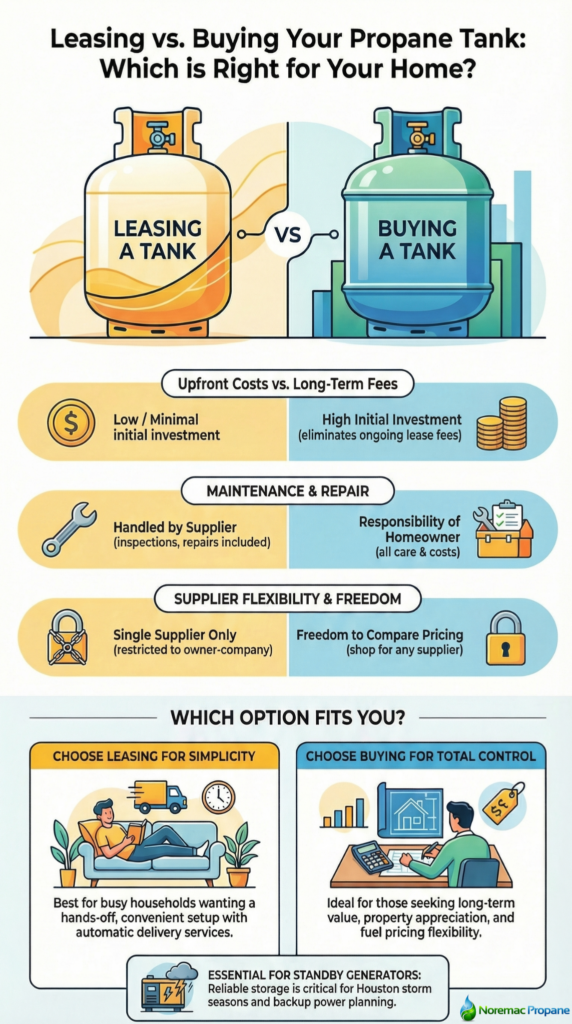
Leasing may be the better fit if you want lower upfront costs, a simpler setup, and a more hands-off experience. Buying may make more sense if you want greater control, more supplier flexibility, and the potential for long-term value.
Before making a decision, ask these key questions:
- Who is responsible for maintenance and repairs?
- Are there lease fees or minimum usage requirements?
- Can the tank be filled by another supplier?
- What happens if I sell my home?
- What size tank is best for my property and propane usage?
The more clearly these questions are answered upfront, the easier it is to choose the right setup with confidence.
The Noremac Difference
At Noremac Propane, we believe propane service should be straightforward, transparent, and built around what works best for the homeowner. Some customers prefer the convenience of leasing. Others want the flexibility that comes with owning their tank. Our job is not to push you into one option. Our job is to explain the differences clearly, answer your questions honestly, and help you choose the setup that fits your home, your usage, and your goals.
We understand the needs of Greater Houston homeowners because this is our market too. Whether you are installing propane at a new home, replacing an old setup, or planning fuel storage for a standby generator, we focus on reliable service, clear communication, and practical recommendations you can trust.
Prefer a quick visual breakdown? Watch the video below for a simple overview of leasing vs. buying a propane tank and which option may fit your home best.
Conclusion
There is no one-size-fits-all answer when it comes to leasing or buying a propane tank. For some homeowners, leasing offers convenience and lower upfront costs. For others, buying offers more flexibility and long-term control. The right choice depends on your priorities, your property, and how you plan to use propane.
If you are comparing propane tank options in Houston or the surrounding areas, Noremac Propane is here to help. Call (346) 410-5698 or visit NoremacPropane.com to talk through your options and find the right propane setup for your home.