
If you are wondering what happens if you run out of propane, the immediate result is that your propane-powered appliances stop operating and the system loses pressure. Before normal service resumes, the tank must be refilled and the propane system must go through the appropriate safety procedures.
For Greater Houston homeowners, a propane runout can interrupt heating, hot water, cooking, fireplaces, pool equipment, and standby-generator operation. The safest response is to leave your propane appliances off, contact your propane provider, and avoid restarting the system yourself.
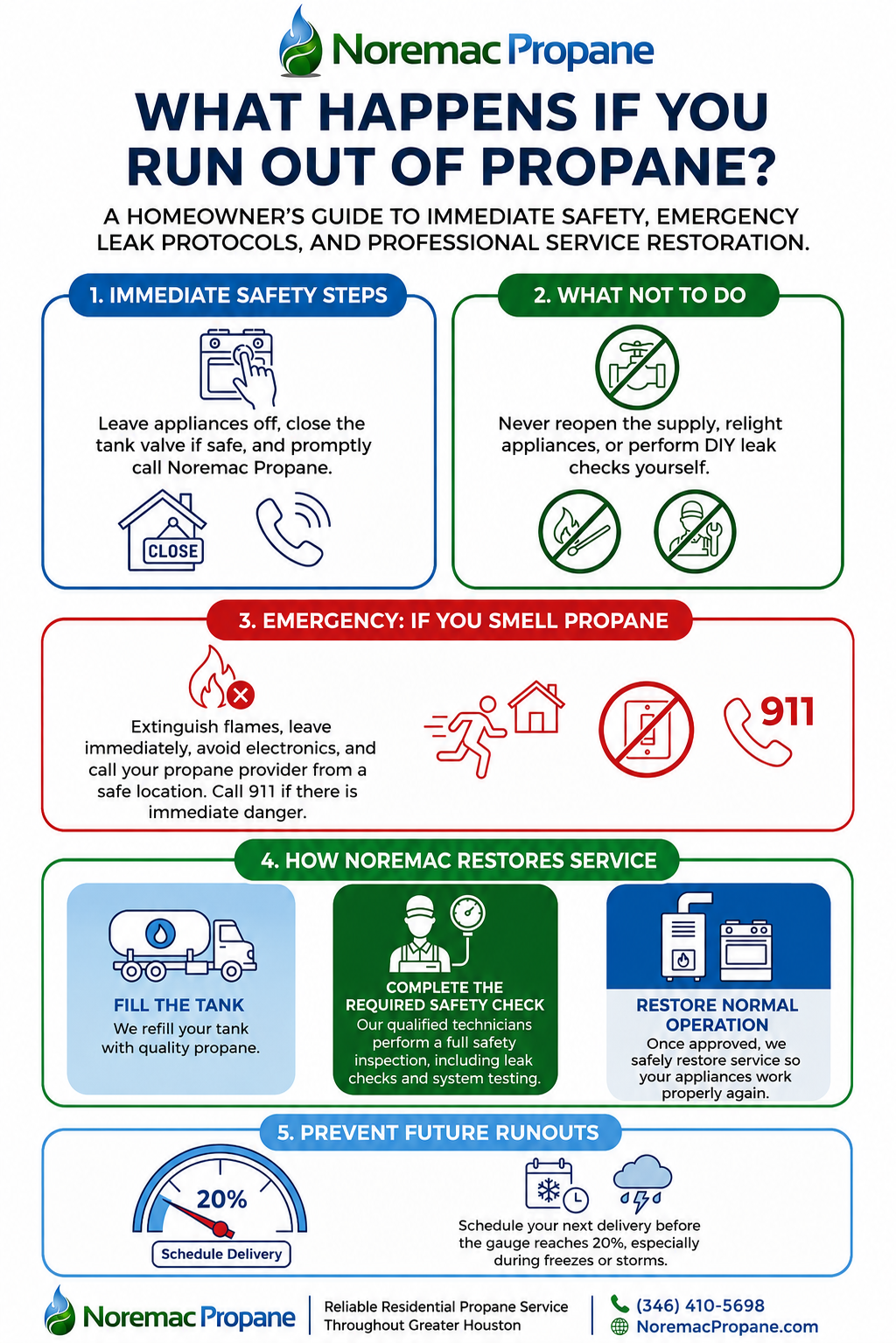
Quick Answer: If your propane tank runs empty, leave your propane appliances off, close the tank valve only if it is safe to do so, and call your propane provider. Do not reopen the valve or relight appliances until the system has been checked and properly restored by a qualified professional.
Is My Propane Tank Low or Completely Empty?
A low propane tank still contains usable fuel and normally means it is time to schedule a delivery.
A complete runout means there is no longer enough propane or system pressure to operate connected appliances. Furnaces, water heaters, fireplaces, cooking equipment, and standby generators may stop operating.
How quickly a low tank becomes empty depends on factors such as:
- Tank size
- Household propane use
- Number of connected appliances
- Weather conditions
- Standby-generator operation
A home using propane mainly for cooking may consume fuel slowly. A home using propane for heating, hot water, a pool heater, and a generator may use it much faster, particularly during a Greater Houston freeze or extended power outage.
A complete runout should not be treated like a normal low-tank refill. The system must be returned to service properly before propane appliances resume normal operation.
What Happens If You Run Out of Propane?
When a residential propane tank runs completely empty, connected appliances stop receiving fuel and pressure in the propane system drops.
That may interrupt:
- Home heating
- Hot water
- Cooking
- Gas fireplaces
- Clothes drying
- Pool or spa heating
- Outdoor kitchens
- Standby-generator operation
Running out of propane does not automatically mean your tank is damaged or that you have a propane leak.
The primary concern is how the propane system is restored. For example, an appliance control or gas outlet could potentially be left open while the fuel supply is empty. Turning propane back on before the system is checked could allow gas to enter an area where it should not.
For that reason, homeowners should not simply refill the tank and turn the propane back on themselves.
What Should I Do If My Propane Tank Runs Out?
If the tank is completely empty and you do not smell propane or otherwise suspect a leak, follow these steps.
Immediate Propane Runout Checklist
Do not turn the propane supply back on yourself.
A completed delivery does not automatically mean the system is ready for normal operation.
Leave propane appliances off.
Do not repeatedly try to restart your furnace, water heater, fireplace, generator, or other propane-powered equipment.
Close the tank valve only if it is safe.
If you know how to operate the service valve and there is no indication of a leak near the tank, close the valve. Do not approach the tank if you hear hissing, see vapor, smell a strong propane odor nearby, or otherwise suspect propane may be escaping.
Call your propane provider.
Tell the provider that the tank has run completely empty rather than simply saying that it is low.
Follow the provider’s instructions.
Depending on the system, access to connected appliances or controls may be necessary during the service-restoration process.
For additional homeowner guidance, review PERC’s propane safety information on propane runouts and service restoration.
What Should I Avoid After a Runout?
Do not attempt technical propane-system work yourself.
Avoid:
- Reopening the tank valve
- Purging or bleeding propane lines
- Adjusting regulators
- Loosening fittings or appliance connectors
- Performing your own leak check or pressure test
- Using a flame to search for a leak
- Relighting appliances before the required safety procedures are completed
A qualified propane professional should handle service restoration after a complete runout.
What Should I Do If I Smell Propane?
A suspected propane leak is different from a simple runout and should be treated as an emergency.
Propane has an identifying odor commonly compared to rotten eggs, skunk spray, or another strong sulfur-like smell.
Propane Leak Emergency Steps
- Extinguish flames and smoking materials.
- Do not use light switches, appliances, electrical controls, or phones in the affected area.
- Get everyone out of the building or area immediately.
- Turn off the propane tank valve only if it is safe and the suspected leak is not at the tank.
- Call your propane provider from a safe location.
- Call 911 or the fire department if there is immediate danger or emergency assistance is needed.
- Stay away until a propane professional or emergency responder says it is safe to return.
Do not remain inside to open windows, search for the source of the odor, or troubleshoot appliances.
For more homeowner guidance, visit our Propane Safety resources.
Why Does the Propane System Need to Be Checked After a Runout?
A propane system should be checked because gas service is being restored after an interruption.
A qualified propane professional evaluates the system and completes the appropriate safety procedures before normal operation resumes.
Residential propane systems in Texas are subject to the Railroad Commission of Texas LP-Gas Safety Rules.
A leak check and a pressure test are not necessarily the same procedure. The type of testing or inspection required can depend on the propane system, the circumstances of the runout, and whether any piping or equipment has been repaired or altered.
Homeowners do not need to determine which procedure applies. The propane professional should evaluate the system and complete the appropriate safety check.
What Happens After a Noremac Propane Runout Service?
After a complete residential runout, Noremac Propane follows a straightforward process:
1. Add Propane to the Tank
Noremac Propane adds enough propane to the tank to begin the service-restoration process.
2. Complete the Required Safety Check
A qualified professional completes the appropriate safety procedures before the delivery continues.
3. Complete the Delivery and Restore Service
If the system passes the required safety check, the propane delivery is completed and normal service can resume.
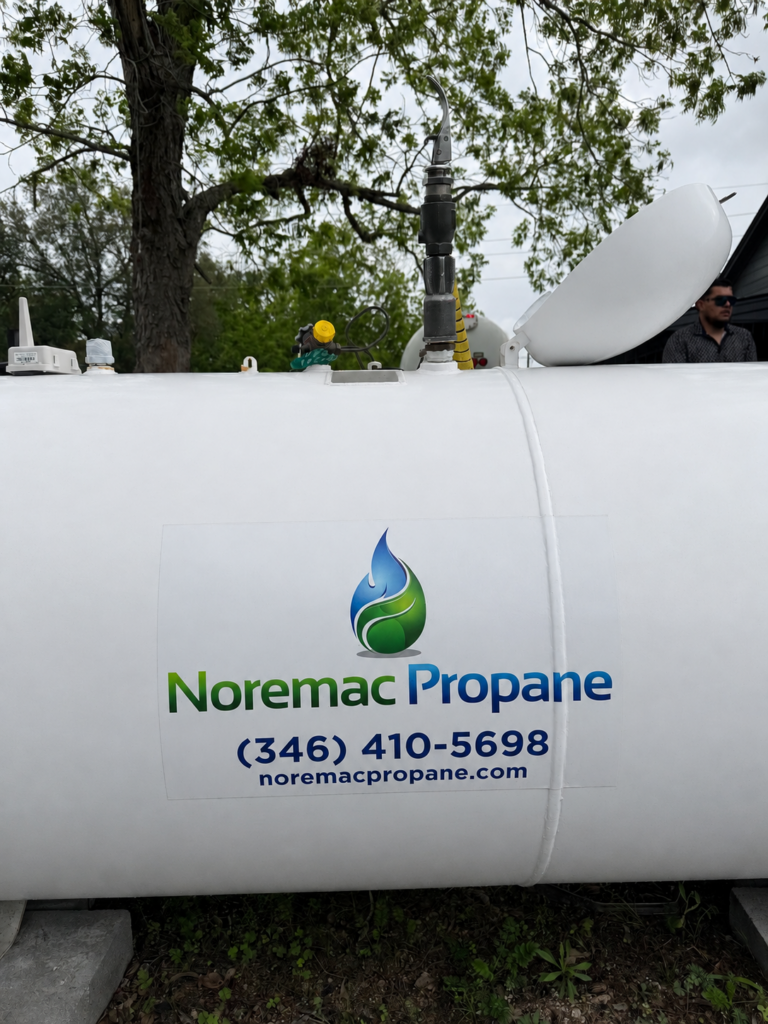
Depending on the home and connected equipment, access to propane appliances or controls may be necessary.
Do not assume that you can turn the tank valve back on immediately after the delivery. Follow the instructions provided by the Noremac Propane team.
Can I Relight My Propane Appliances Myself?
After a complete runout, do not turn the tank back on or attempt to relight propane appliances before the required safety procedures are completed.
Trying to restart equipment on an unchecked system can create unnecessary fire or explosion hazards.
Once the system has been properly checked and restored, follow the instructions provided by your propane professional and the appliance manufacturer.
How Do I Read My Propane Tank Gauge?
A residential propane tank gauge shows the approximate percentage of propane remaining in the tank.
How to Read a Propane Tank Gauge in Three Steps
- Go to the outdoor propane tank.
- Lift the protective dome on top of the tank.
- Locate the round percentage gauge and note where the needle is pointing.
For additional guidance, PERC explains how to read a propane tank gauge and recommends checking it regularly.
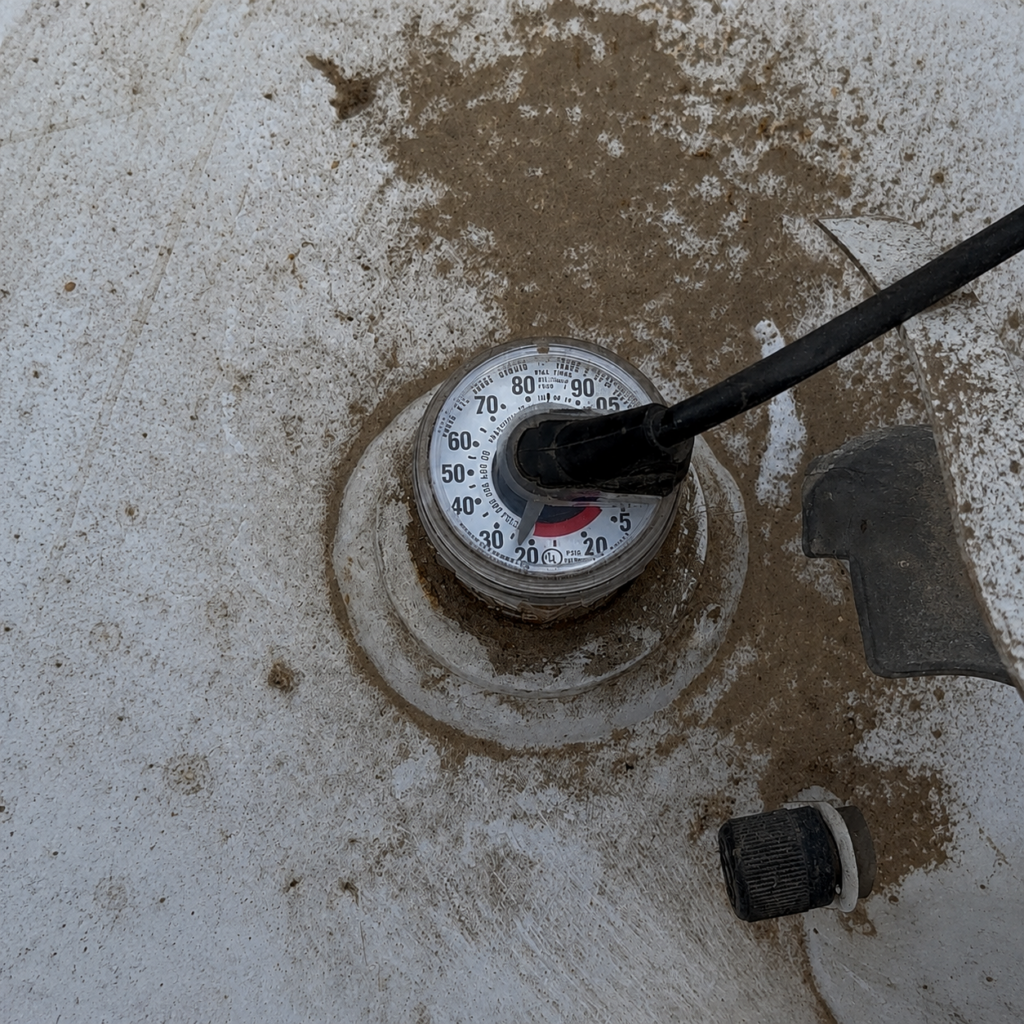
A full residential propane tank normally reads around 80%, not 100%. Space is intentionally left in the tank so liquid propane has room to expand as temperatures change.
A reading of 20% does not mean the tank is empty. It means it is time to make sure your next delivery is already scheduled.
When Should I Order a Propane Refill?
Noremac Propane recommends scheduling residential propane delivery before the tank gauge reaches 20%.
Consider ordering even earlier when:
- A hurricane or tropical storm is approaching
- A freeze is forecast
- A standby generator is operating
- Household propane use has increased
- A new propane appliance has been added
- Property access may become difficult
- The gauge is dropping faster than normal
Do not wait until your furnace, water heater, or generator stops operating before checking the tank.
How Do Standby Generators Affect Propane Levels?
Standby generators can use propane much faster than ordinary cooking or water-heating equipment during an extended outage.
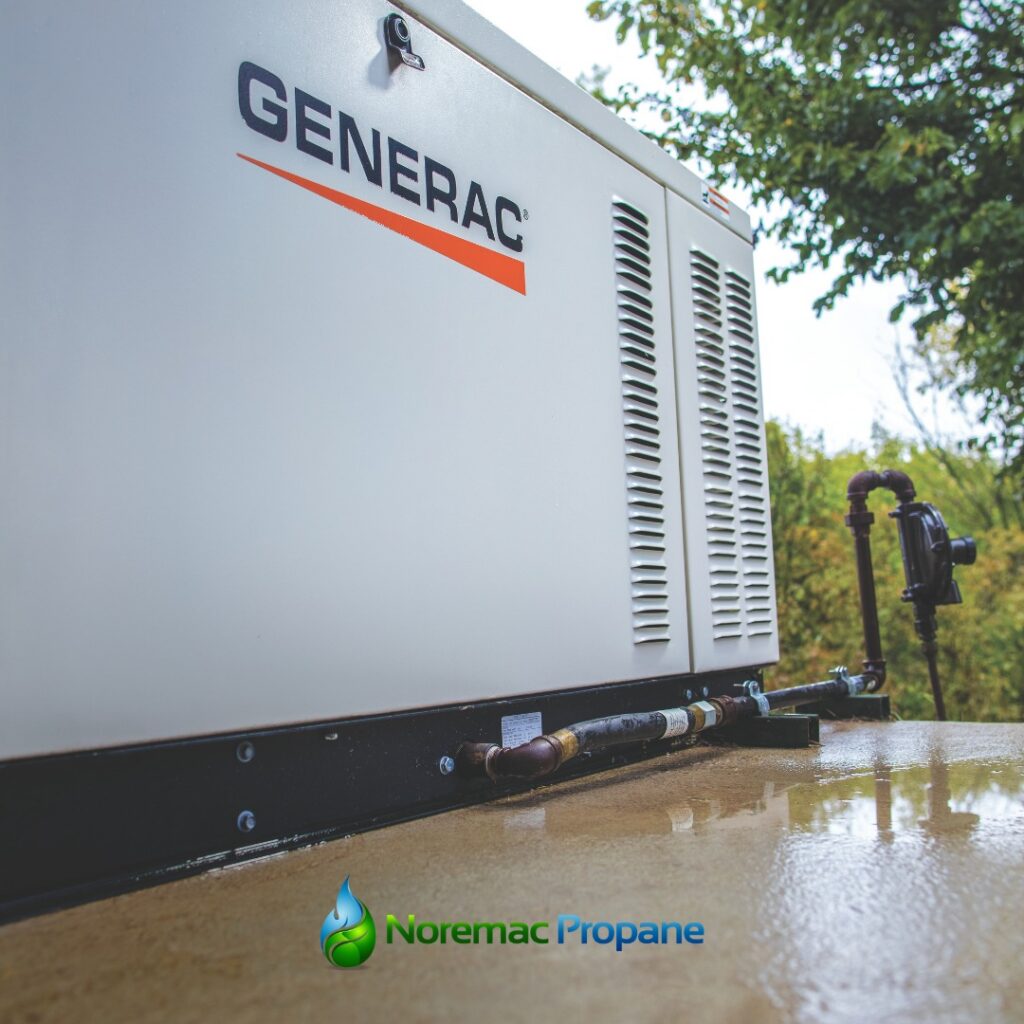
Preparing for severe weather? Review our Propane Hurricane Safety Guide for additional storm-preparation tips.
During a Greater Houston hurricane, freeze, or prolonged power outage:
- Check the propane gauge more frequently
- Account for fuel being used by both the generator and household appliances
- Schedule propane delivery earlier than usual
- Follow the operating and maintenance instructions for your specific generator
Generator fuel consumption and maintenance requirements vary by manufacturer, model, electrical load, and operating conditions, so avoid relying on universal runtime or gallons-per-hour estimates.
Automatic Delivery, Will-Call, and Tank Monitoring
Homeowners generally manage propane deliveries through will-call service, automatic delivery, tank monitoring, or a combination of these options.
Will-Call Delivery
With will-call service, the homeowner monitors the tank gauge and contacts the provider when propane is needed.
This provides direct control but requires regular gauge checks and early ordering.
Automatic Delivery
With automatic delivery, the propane provider estimates when fuel will be needed using available account and usage information.
Automatic delivery can help reduce runout risk, but sudden changes in propane consumption—such as extended generator operation—can affect those estimates.
Remote Tank Monitoring
A remote tank monitor provides additional information about the propane level and can help improve delivery planning.
Tank monitoring can be especially useful during severe weather or when propane usage changes significantly.
Automatic delivery and tank monitoring can reduce the chance of a runout, but homeowners should still pay attention to their propane supply.
How Can I Prevent Another Propane Runout?
The best way to avoid a runout is to monitor your fuel level and plan deliveries before the tank becomes critically low.
Propane Runout Prevention Checklist
- Check the tank gauge regularly.
- Schedule delivery before the gauge reaches 20%.
- Check more frequently during freezes, storms, and generator use.
- Order earlier when heavy propane consumption is expected.
- Consider automatic delivery.
- Ask about remote tank monitoring.
- Notify your provider when adding new propane appliances.
- Keep gates and pathways to the tank accessible.
- Contact your provider if the gauge appears damaged or stops changing.
Frequently Asked Questions About Propane Runouts
Is running out of propane an emergency?
Not necessarily. A propane runout with no odor or other sign of a leak is different from a suspected propane leak. However, the propane system should be properly checked before normal operation resumes. If you smell propane or suspect a leak, leave the area immediately and treat the situation as an emergency.
Can I turn the propane tank valve back on myself?
No. After a complete propane runout, homeowners should not turn the propane supply back on themselves. A qualified professional should complete the appropriate safety procedures before service is restored.
Does my propane system need to be checked after running out?
Yes. After a complete runout, the system should go through the appropriate safety procedures before normal propane service resumes.
Can Noremac Propane add propane before the safety check?
Yes. Noremac Propane adds enough propane to the tank to perform the required safety check. If the system passes the check, the delivery is then completed and normal propane service can be restored.
What should I do if I smell propane?
Leave the affected area immediately. Avoid flames, sparks, electrical switches, appliances, and phones in the affected area. Call your propane provider from a safe location, and call 911 or the fire department if there is immediate danger or emergency assistance is needed.
At what percentage should I schedule a propane delivery?
Noremac Propane recommends scheduling residential propane delivery before the tank gauge reaches 20%. Order earlier during severe weather, extended generator use, or unusually heavy propane consumption.
Can a standby generator empty my propane tank faster?
Yes. Extended standby-generator operation can significantly increase propane use. During a power outage, check your tank gauge more frequently and arrange delivery earlier than you normally would.
Don’t Wait Until Your Propane Tank Is Empty
A propane runout is inconvenient, but in many cases it is also preventable. The simplest habit is to check your tank gauge regularly and schedule your next delivery before it reaches 20%—especially during freezes, severe weather, or periods of heavy generator use.
If your tank does run completely empty, leave your propane appliances off and contact a qualified propane provider. The system should go through the appropriate safety procedures before normal propane service resumes.
At Noremac Propane, we help Greater Houston homeowners stay ahead of their propane needs with dependable residential delivery, responsive service, and straightforward support when something does not go as planned.
Running low or need propane service?
Call Noremac Propane at (346) 410-5698 or visit NoremacPropane.com to get started.
Reliable local propane when you need it most.