
Propane Tank Installations
At Noremac Propane, every propane tank installation starts with safety and compliance. Whether you’re building a new home, upgrading your current system, or switching to propane, proper tank placement matters.
State and national codes set clear requirements for propane tank placement. These include distances from homes, property lines, and possible ignition sources. Review the general clearance guidelines below for the tank sizes we install throughout the Greater Houston area.
Above-Ground Tank Clearances
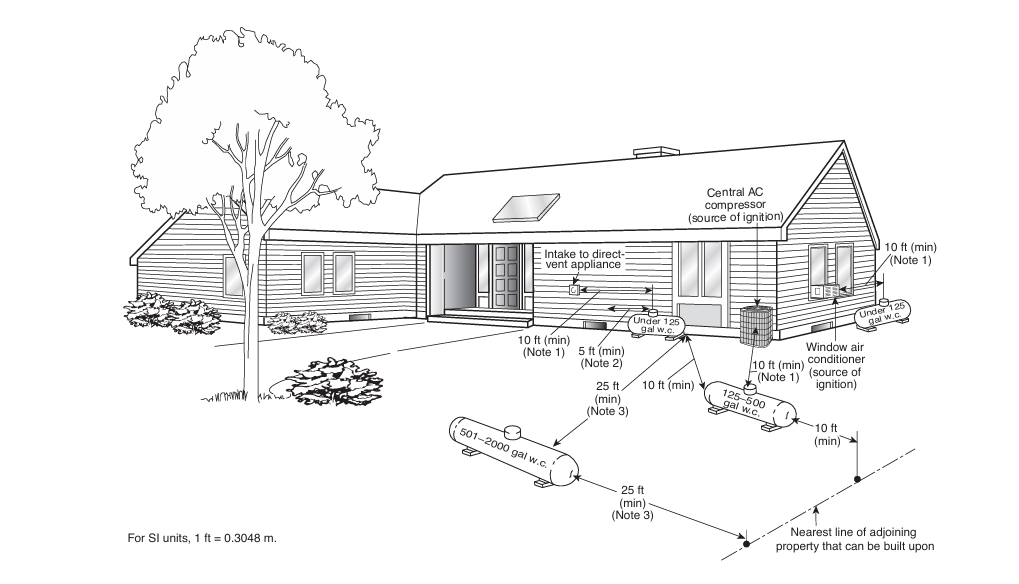
Noremac Propane installs aboveground propane tanks in 120-, 250-, 320-, 500-, and 1,000-gallon sizes. We serve residential and commercial properties throughout Greater Houston.
120 Gallons
These tanks can often be placed near the home. Even so, they must stay at least 10 feet from ignition sources like a central A/C compressor or window A/C unit. They also need at least 5 feet of clearance from crawl space openings or direct-vent intakes.
250 to 500 Gallons
These tanks must be placed at least 10 feet from the home, ignition sources, and adjoining property lines that can be built upon.
1,000 Gallons
These tanks require more space and must be placed at least 25 feet from the home and adjoining property lines.
Why Placement Matters
Good placement protects your home and keeps the required clearances from ignition sources and openings. It also gives our crew safe, practical access for service and delivery.
What Size Propane Tank Do I Need?
The right tank size comes down to how much propane your home actually uses. A simple rule of thumb: the more propane appliances you run, the larger the tank. Use the guide below as a starting point. During your free site survey, we calculate your exact BTU load and confirm the best fit.
| What you run on propane | Typical tank size |
|---|---|
| Cooking, hot water, and a clothes dryer | 250 gallons |
| The above plus whole-home heating | 250–500 gallons |
| Several appliances, a pool heater, or a standby generator | 500 gallons |
| Large home, heavy use, or many major appliances | 500–1,000 gallons |
| Agricultural equipment or commercial operations | 1,000 gallons |
A 250-gallon tank is a comfortable, full-size choice for many homes — not a “starter” size. Bigger tanks simply mean fewer refills and more reserve for high-demand setups like generators and pools.
What to Expect During a Propane Tank Installation
Every property is different, but most residential propane tank installations follow a similar process:
1. Site Survey & Tank Sizing
We review your property, propane needs, tank location, delivery access, and applicable clearance requirements.
2. Installation Planning
Our team helps determine the right tank size and plans the best aboveground installation for your property.
3. Tank Installation & Propane Delivery
The tank is positioned, connected to the gas system, and filled with propane.
4. Safety Check & Final Setup
After the tank is filled, applicable safety checks are completed before the system is placed into service.
How Long Will a Propane Tank Last?
This is one of the most common questions we hear. The answer depends on how much propane your home uses. Still, a few basics can help set expectations.
Propane tanks are typically filled to about 80% of their water capacity to allow room for the propane to expand. A 250-gallon tank holds roughly 200 gallons of propane when full. A 500-gallon tank holds about 400 gallons, while a 1,000-gallon tank holds about 800 gallons.
How fast you use that supply depends on what you run:
- Light use, such as cooking and hot water: A tank may last several months between fills.
- Whole-home heating: Propane use can increase significantly during colder weather when the furnace runs more often.
- Standby generators: A generator can use a substantial amount of propane during an extended outage, depending on its size, electrical load, and how long it runs.
- Pools and multiple appliances: Pool heaters, fireplaces, dryers, and other propane appliances can also increase overall fuel consumption.
Homes with generators, pool heaters, whole-home heating, or several major propane appliances may benefit from a larger tank and more frequent monitoring.
With automatic delivery and tank monitoring, Noremac Propane can help track your tank level and schedule deliveries before you run low.
Underground Tank Clearances
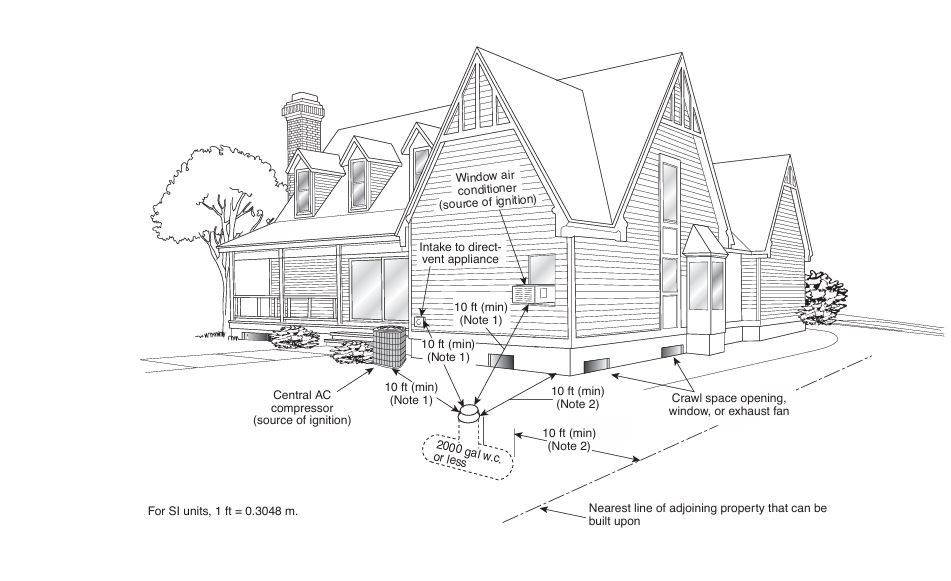
Underground propane tanks are a popular choice for homeowners who prefer a cleaner look and more open yard space. Although most of the tank is buried, the access dome that houses the valves and other components remains above ground and must meet applicable clearance requirements.
The relief valve inside the dome must be located at least 10 feet from building openings such as windows, doors, crawl spaces, or exhaust fans. The dome must also remain at least 10 feet from ignition sources such as central A/C compressors, window A/C units, and direct-vent intakes.
Underground Tank Protection
Underground tanks require proper installation and protection to support safe, long-term use. Site conditions, protective coatings, corrosion protection, and correct placement all play an important role in the installation and life of the tank.
Propane Tank Safety & Maintenance
Propane is safe and reliable when it’s installed and maintained correctly. Here are a few important basics every homeowner should know.
What to do if you smell gas: Leave the area immediately and avoid flames, sparks, light switches, appliances, phones, or anything else that could create an ignition source. Once you are a safe distance away, call Noremac Propane, 911, or your local fire department. Do not return until the area has been determined safe.
Keep propane in the tank: Try not to let your tank run completely empty. If the gas runs out or is shut off, a qualified professional should check the propane system for leaks before the gas is turned back on. For routine service, Noremac Propane recommends scheduling a refill before your tank reaches 20% or using automatic delivery and tank monitoring for added peace of mind.
Schedule professional system checks when needed: If you notice an unusual odor, changes in appliance performance, or concerns about your regulator, valves, piping, or other propane equipment, contact a qualified propane professional to evaluate the system.
Keep the area around your tank clear: Keep brush, clutter, grills, and combustible materials away from the tank, and make sure there is safe, practical access for propane deliveries and service.
Building a New Home or Switching to Propane?
Planning for propane early can make the installation process much smoother. We work with homeowners and builders to plan the installation. This includes tank location, gas lines, appliance needs, delivery access, and applicable clearance requirements.
Whether you are building a new home, adding propane to an existing property, or converting from another fuel source, Noremac Propane can help. We can plan a propane system that fits your home and usage needs.
Getting us involved early can also help identify potential site challenges before they become more difficult or costly to address later.
Why Homeowners Choose Noremac Propane
- Local and independent. We’re a Houston-area company that has served our own neighbors since 2010 — not a national chain.
- Straightforward pricing. We clearly explain applicable tank, delivery, monitoring, and service costs so you know what to expect.
- Automatic delivery and tank monitoring. We can help track your tank level and schedule deliveries to reduce the risk of running low.
- Real people and local service. When you call, you reach a local team that knows the Greater Houston area and is here to help.
From your first propane tank installation to every refill after, you get dependable local service from a team that treats you like a neighbor.
Ready to Plan Your Installation?
Every property is different. Our team can help evaluate your propane needs, tank size, placement options, delivery access, and applicable clearance requirements.
Call Noremac Propane today at (346) 410-5698 to schedule your site consultation and take the next step toward your propane tank installation.
Propane Tank Installation FAQs
How far does a propane tank need to be from the house?
The required distance depends on the size of the propane tank and the layout of the property. A 120-gallon aboveground propane tank generally must be at least 5 feet from building openings and 10 feet from ignition sources. Aboveground tanks from 250 to 500 gallons generally require at least 10 feet of clearance from buildings and property lines that can be built upon. A 1,000-gallon aboveground tank may require 25 feet of separation, although certain installations can qualify for a reduced 10-foot distance under applicable requirements. During a free site survey, Noremac Propane confirms the exact clearances for your property and installation.
What size propane tanks do you install?
Noremac Propane installs 120-, 250-, 320-, 500-, and 1,000-gallon aboveground propane tanks for homes and commercial properties throughout Greater Houston. The right propane tank size depends on your home’s propane usage, appliances, heating needs, standby generator, pool heater, and how often you want deliveries. During a free site survey, our team can evaluate your property and help determine the best tank size for your needs.
How far does a propane tank have to be from the property line?
The required distance depends on the size of the propane tank. Aboveground propane tanks from 250 to 500 gallons generally need to be at least 10 feet from a property line that can be built upon. A 1,000-gallon aboveground tank may require 25 feet of separation, although certain installations can qualify for a reduced 10-foot distance under applicable requirements. Smaller tanks have different clearance rules. During a free site survey, Noremac Propane confirms the required placement for your property and tank size.
Can a propane tank be installed underground?
Yes. Propane tanks can be installed underground when they are designed for underground use and the installation meets applicable safety, clearance, corrosion-protection, and site requirements. Most of the tank remains buried, with only the access dome visible above ground. Exact placement depends on tank size, property layout, building openings, ignition sources, and other site conditions.
Propane Tank Costs, Ownership & Permitting FAQs
How much does propane tank installation cost?
The cost of a propane tank installation depends on factors such as tank size, gas line length, site preparation, permitting, and the specific requirements of your property. After a free site survey, we’ll provide a clear, itemized quote so you know what to expect before moving forward.
Do you remove or replace my old tank?
If you are switching from another propane provider, the process depends on who owns the existing tank. A company-owned tank is typically retrieved by the provider that owns it. Noremac Propane can help you plan the transition and install your new tank while working to minimize any interruption in service.
Should I buy or lease my propane tank?
Both options have advantages. Buying a propane tank gives you ownership of the equipment and may provide more flexibility over time, while leasing can reduce the upfront cost and may include additional services such as tank monitoring. The best choice depends on your propane usage, budget, and long-term plans for the property. Noremac Propane can help you compare both options and decide what makes the most sense for your home.
Do you handle permitting and code compliance?
Yes. We handle the site survey, help coordinate any applicable permitting, and plan tank placement to meet Texas Railroad Commission safety requirements and other applicable codes. Every property is different, which is why our team plans each installation around your home, property lines, ignition sources, building openings, and safe delivery access.