
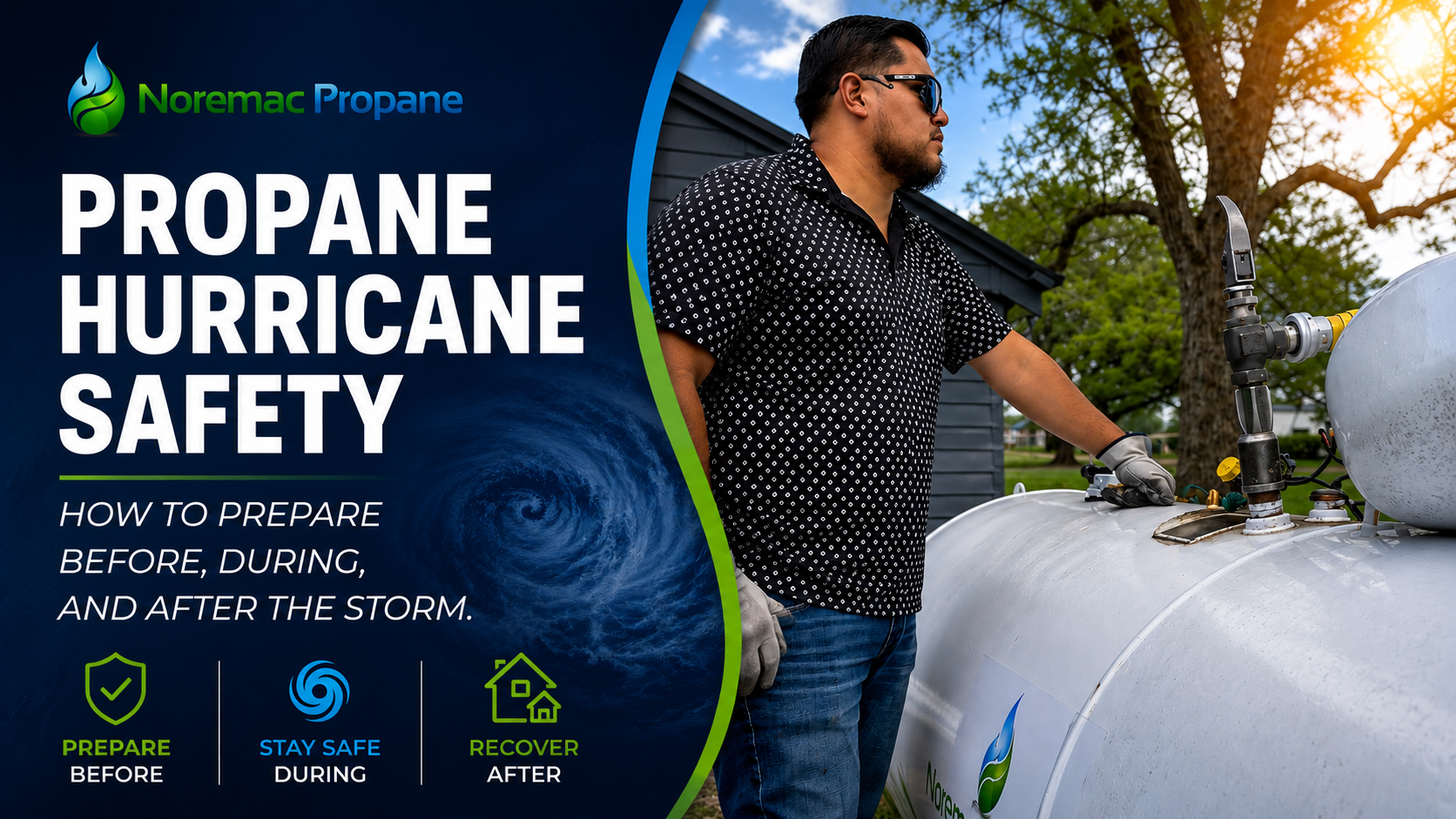
From Houston out to communities like Brookshire, Conroe, East Bernard, Fulshear, and Hempstead, hurricane season is a reality that requires serious preparation. Severe storms, flooding, and extended power outages can disrupt daily life quickly, making fuel reliability more important than ever for homeowners who depend on propane.
At Noremac Propane, our team has helped homeowners across Greater Houston prepare propane systems before major Gulf Coast storms and inspect damaged systems after hurricanes, flooding events, and extended power outages. We know that your propane system is only as reliable as your preparation.
This guide is designed to bridge the gap between “storm anxiety” and “expert-backed confidence,” giving you specific, actionable tools to help protect your home and loved ones before the first warning is ever issued.
Quick Answers for Storm Safety
Should I turn off my propane tank during a hurricane?
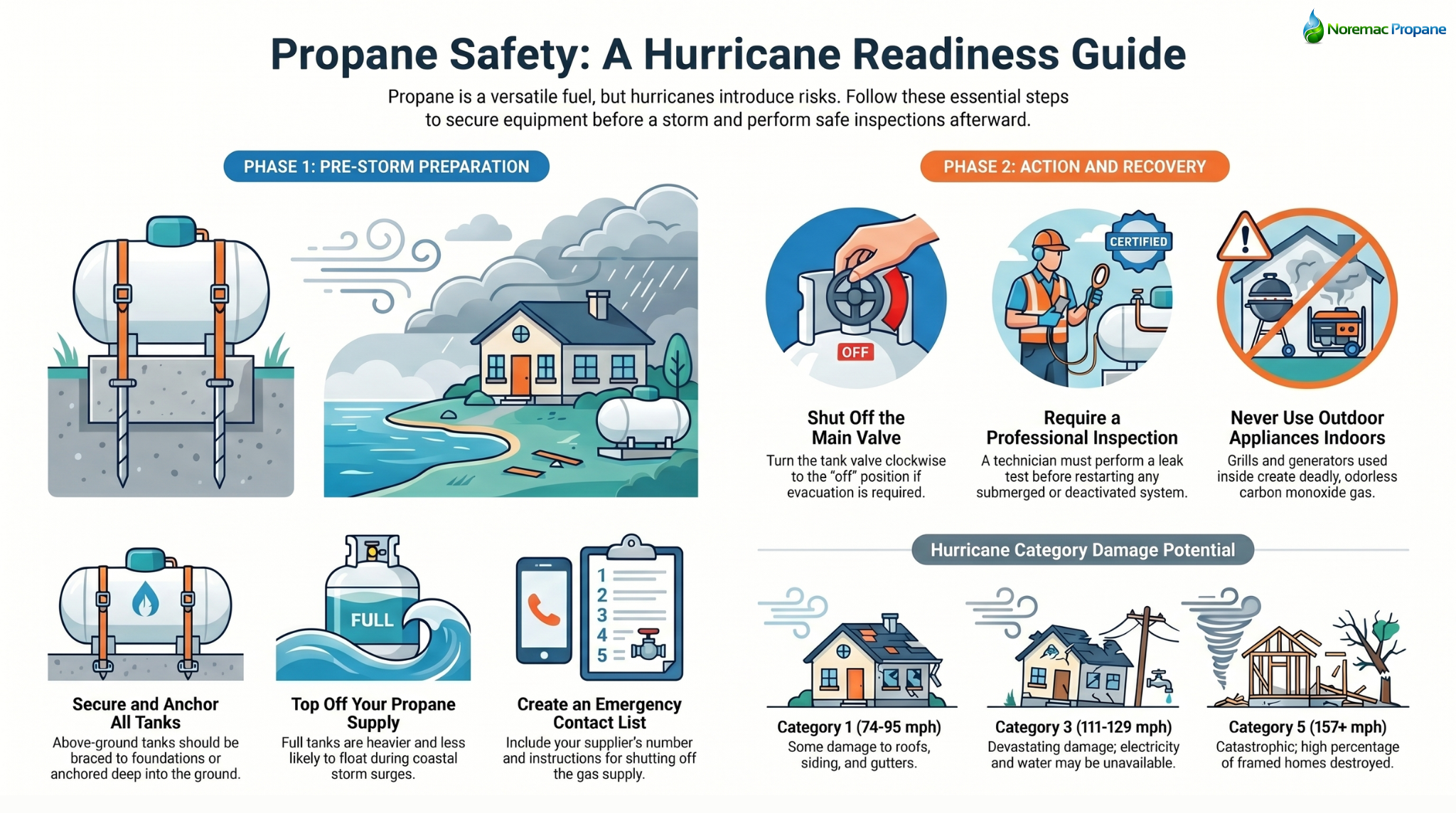
Yes. If authorities order an evacuation, turn the main gas supply valve clockwise (righty-tighty) to shut off the system. If you shelter in place with a standby generator, strictly follow the manufacturer’s procedures. A professional must configure your propane system for generator use beforehand.
How do I secure my propane tank for high winds and flooding?
Because propane tanks can act like “metal balloons” and float away in rising water, they must be secured with professional earth auger anchors, specialized straps, or chains bolted directly to a concrete pad to prevent them from shifting.
What should I do if I smell gas (rotten eggs) after a storm?
NO FLAMES OR SPARKS. Immediately extinguish all smoking materials. Do not touch any electrical switches, thermostats, or phones indoors, as a spark can ignite the gas. Evacuate the area immediately, shut off the main valve at the tank if it is safe to do so, and call 911 or your propane provider from a safe distance.
What is the most important safety rule after a storm?
The “Golden Rule” of recovery is to never turn the gas back on yourself if the system was shut off or if the tank moved. A qualified service technician must perform a professional, pressurized leak test before the system is safely restarted.
Phase 1: Pre-Storm Preparation (Before the Clouds Arrive)
In our neck of the woods, the best defense is a proactive offense. Unanchored tanks can float away in floodwaters, snapping gas lines and creating massive hazards. Whether you decided to lease your tank or buy it outright, protecting that equipment is step one.
Your Actionable Pre-Storm Checklist:
- Keep Your Tank Full (The Weight Rule): Prioritize a full fill-up early in the season. The sheer weight of liquid propane is your best defense against the tank floating. Don’t wait until you’re panic-searching for an emergency propane delivery near me—top off early.
- Know Your Valves: Walk out to your tank today, open the dome, and locate the main shut-off valve. Ensure every adult in the house knows how to turn it off.
- Schedule a Professional Inspection: Have a technician verify your tank is properly anchored. If you haven’t booked your routine maintenance yet, combining it with a comprehensive propane tank inspection in Houston ensures your regulators, piping, and fittings are storm ready.
- Audit Your Emergency Kits: Prepare a 3-day Go-Kit (portable supplies) and a 2-week Stay-at-Home Kit. (For a complete checklist, visit [Ready.gov’s Hurricane Guide)
- Secure Portable Cylinders: Store 20lb grill tanks in a secure, upright position outdoors. Never store these cylinders in your garage, basement, or shed.
Phase 2: During the Storm (Maintaining Personal Safety)
Once severe weather hits and the power goes out, your focus must shift from protecting your property to protecting your family. Unfortunately, we have seen far too many emergencies caused by improper equipment use during extended outages.
Generator & Appliance Safety Protocols
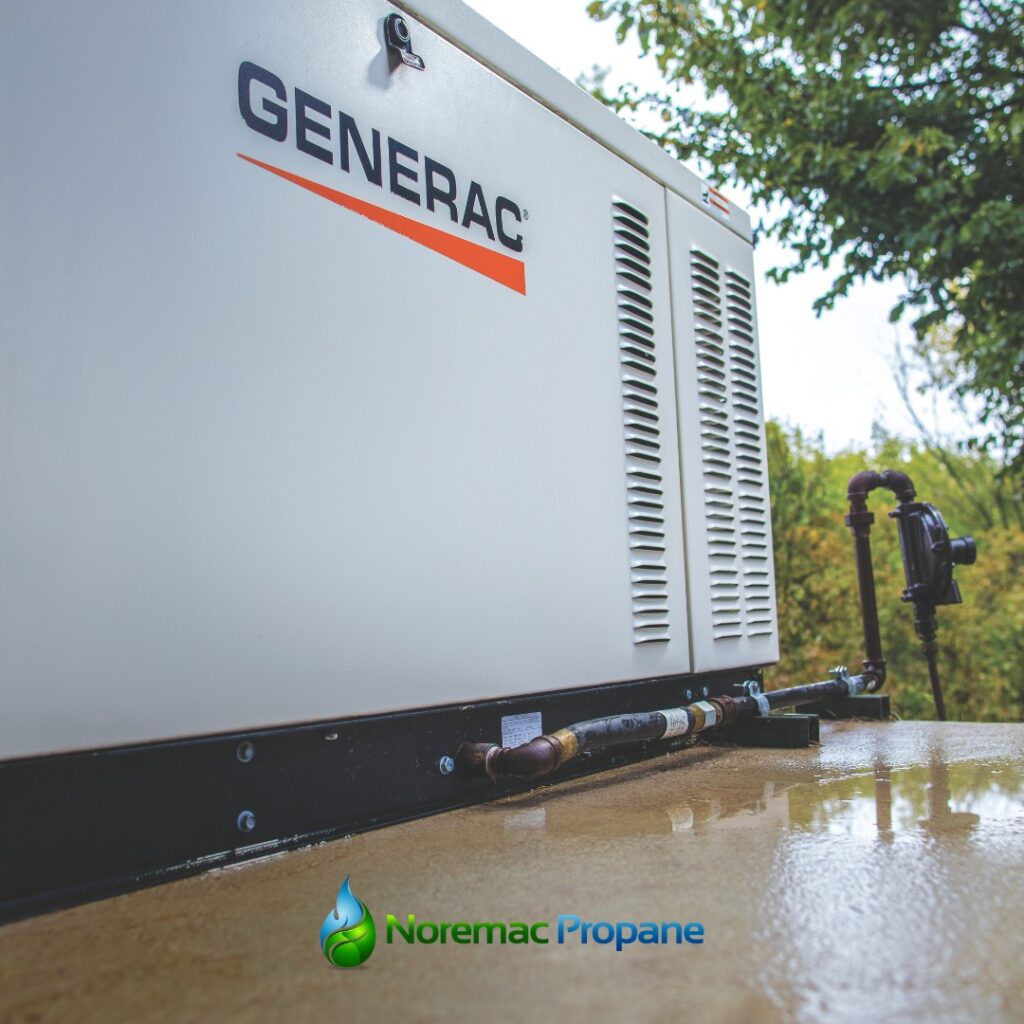
- Distance is Life for Generators: Always operate your portable or standby generator at least 20 feet from your home. Make sure you have secured your generator propane refill well ahead of the storm, so you don’t run out of fuel mid-outage.
- Keep it Outside: Never run a generator, propane grill, or outdoor patio heater indoors, in a garage (even with the door open), or in a shed. Carbon Monoxide (CO) is an invisible, odorless killer.
- Watch the Vents: Ensure generator exhaust is pointed away from windows, doors, and fresh-air intakes.
- Prioritize Evacuation: If local authorities tell you to leave, go. Equipment can be replaced; your family cannot.
Phase 3: Post-Storm Recovery and Inspection
Once the storm passes and it’s safe to return, treat your property with extreme caution. Practicing post-storm vigilance is just as important as your initial prep.
The Visual Inspection (From a Safe Distance):
- Shifted Foundations: If the tank has moved even a few inches, the underground or connecting lines may have suffered micro-fractures.
- The Regulator Check: If your regulator was submerged in floodwater, it is no longer safe and must be replaced by a professional. Silt inside the mechanism can cause dangerous over-pressure situations in your home.
- Debris Clearing Hazards: When cleaning up your yard, use extreme caution with chainsaws or tractors near your tank to avoid accidentally cutting hidden underground copper lines.
The Golden Rule of Re-Entry
If you shut off your gas valve before evacuating, or if there is any evidence that your tank moved or was submerged, do not attempt to turn the gas back on yourself. Texas regulations and industry safety standards require that a qualified service technician perform a professional leak test to prevent fires and explosions.
Essential Safety Warnings Summary
| Hazard | Safe Action |
| Rising Floodwaters | Keep tanks full for weight; ensure ground anchors are properly installed. |
| Smelling Gas (Rotten Eggs) | Do not use phones or light switches. Evacuate immediately and call from a safe distance. |
| Generator Use | Operate at least 20ft from the house; never use in garages, sheds, or indoors. |
| Submerged Regulators/Controls | Do not use. These cannot be salvaged and must be replaced by a professional. |
Frequently Asked Questions About Propane During Hurricane Season
Modern propane tanks are built with multiple safety features and are very durable, but flooding, debris impact, or damaged gas lines can create serious hazards if the system is not properly secured and inspected.
Runtime depends on generator size and electrical load, but many homes can operate for several days to over a week during an outage.
In some cases, underground propane tanks may offer advantages in high-wind regions, but proper installation and drainage considerations are critical.
A qualified propane service technician should inspect all regulators, valves, piping, and connections before the system is placed back into operation.
Secure Your Peace of Mind Today
Preparation is the ultimate responsible step you can take to protect your family and your property. In our humid climate, ground shifting and equipment wear are constant challenges; don’t wait for a tropical depression to form in the Gulf to check your system.
Contact Noremac Propane today to schedule your comprehensive safety inspection and secure your fuel supply. Whether you are in Houston, Fulshear, Conroe, or anywhere in between, our local experts are standing by to ensure your system is properly anchored, fueled, and ready to stand up to whatever the season throws our way.